Leonardo AI
If you’re looking for an AI tool to generate images, illustrations, concept art, or even short videos, Leonardo AI is definitely an excellent option. Find out what it is, what it can do, how much it costs, and who it’s really useful for.
What is Leonardo AI?
Leonardo AI is an AI-powered image generation platform founded in Australia in 2022. In July 2024, it was acquired by Canva, the Australian design giant, for over $320 million, providing it with the financial and technical backing to continue growing. Today, it is considered one of the most comprehensive AI-powered creative platforms on the market.
In summary, what can you do with Leonardo AI?
- 🎨 Generate images from text in seconds, with control over style and parameters
- 🧠 Choose from several proprietary and third-party models (photorealism, anime, illustration, etc.)
- 🖌️ Edit and refine with integrated canvas, upscaler and background removal.
- 🖼️ Transform sketches or photos into finished art (picture by picture).
- 🎬 Animate images and create short videos with Motion.
- 🕹️ Create assets for video games, including UV-mapped textures.
- 🧬 Train your own models for consistent characters or styles.
- 🔌 Integrate it via API into your own apps, sites, or tools.
- 🆓 Start for free with daily tokens and no card required.
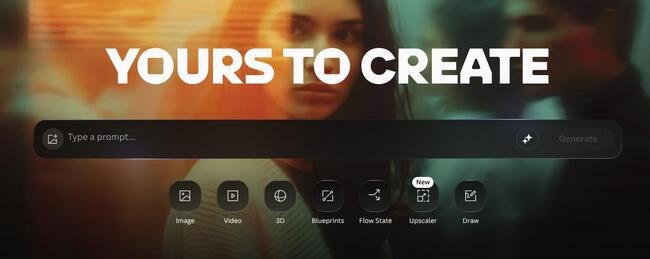
🤖 The main functions of Leonardo AI
Text-to-image generation
You write a description, choose a model, and in seconds you get several variations of the image. You don’t need machine learning knowledge: describe what you want, select the model, adjust optional visual parameters such as guidance scale, seed, or resolution, and in 10 to 30 seconds you have the image ready to use.
Multiple proprietary and third-party models
It features models with different orientations. Furthermore, it integrates third-party models such as Lucid Origin, Flux, and GPT-1, each optimized for different styles and use cases.
Canvas and advanced editing
Leonardo includes its own editor that allows you to enhance, zoom in, and remove backgrounds to easily refine the result. It also offers an image upscaler considered a market leader.
Image by image
You can start with a sketch or your own photo and transform it into a finished piece of art, preserving the original structure of the composition.
Video Generation (Motion)
Leonardo also allows you to animate still images. In March 2026, it was updated to Motion 2.0, with clips up to 6 seconds long and basic camera controls such as zoom and pan. Its mobile app already integrates external models like Google’s Veo 3.
Assets for video games
It’s a favorite platform among the game development community because it allows users to create sprites, textures, concept art, and interface elements, as well as generate batch variations to accelerate development. It also generates UV-mapped textures from text (albedo, normal, and roughness maps) that can be directly imported into Unity or Unreal Engine.
Training of own models
You can train your own AI models to maintain consistent characters or styles across different generations, which is very useful for branding or narrative projects.
API for developers
Since March 2026, available in the Artisan and Maestro plans, the Creative Engine API allows integrating Leonardo’s image generation directly into your own applications, with use cases ranging from SaaS design tools to ecommerce and chatbots.
💲 Plans and prices
Leonardo AI has a free, fairly limited basic plan that lets you explore its tools.
- 150 tokens per day
- Public access to your creations
- Basic quality improvements
Paid plans.
- Essential: 8,500 tokens/month, 10 personal AI models, 2 simultaneous generations
- Premium: 25,000 tokens/month, 20 personal AI models, 3 simultaneous generations, maximum of 10 in the queue
- Ultimate: 60,000 tokens/month, 50 personal AI models, 6 simultaneous generations
- All of these plans include improvements in quality, private access, and a token bank
A couple of important details about the free plan:
- Images generated on the free plan are watermarked.
- If you’re a paid subscriber, you retain full ownership and rights to your creations; on the free plan, you receive a commercial use license, but Leonardo retains broader rights to that content.
- The “unlimited tokens” on the higher-tier plans have some nuances: the “unlimited” mode only applies in a relaxed way to selected Leonardo-developed models; third-party models always consume tokens, without exception.
👨🎨 Who is Leonardo AI useful for?
- Graphic designers and social media content creators.
- Game developers who need assets, textures, and concept art.
- Brands seeking visual consistency by training their own models.
- Marketing teams that need to generate unique advertising images without relying on stock photo libraries.